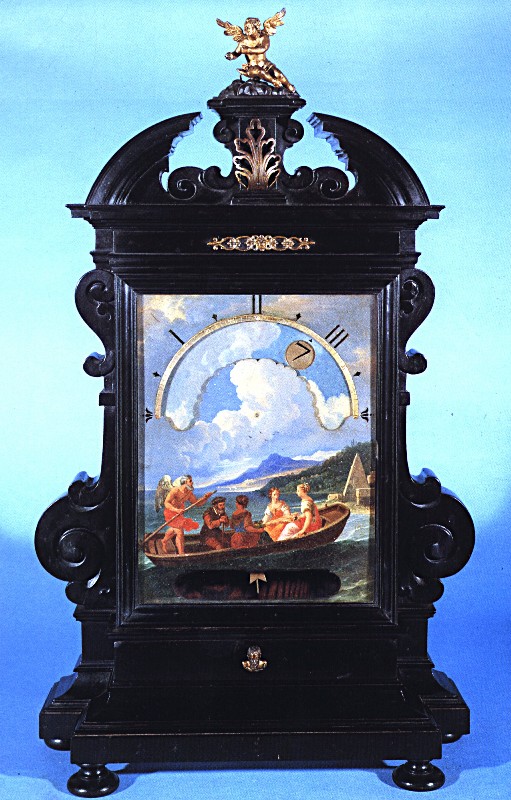
Night clock: how to read the hour at night during XVII Century
Roma, 27/01/2015
The night clock, invented in the second half of the XVII Century, allows to read the exact time even in the darkness, in a time when electricity was not invented and nor were the minute, quarter and hour repeating mechanisms.
The story behind the invention of the night clock gives us a fascinating insight into the practical considerations of one of the most important patrons in Rome during the 17th century: Pope Alexander VII (1655-1667). He was unable to sleep at night because of a huge sense of responibility for his role, and for this reason he wanted to be able to easily read the hour even in the darkness. The Campani brothers created the night clock with had a lamp or a candle behind the open work dial, which enabled the pope to read the time day and night.
After this commission the Campanis created several more night clocks for princes, nobles, ambassadors and other members of the high clergy; the fashion for this kind of clock quickly spread through the whole of Italy and the rest of Europe.
This site is registered on wpml.org as a development site. Switch to a production site key to remove this banner.
The following panel allows you to customise your consent preferences for any
tracking technology used to help us achieve the features and activities described in our cookie policy. To learn more about how these trackers help us and how they
work, refer to the cookie policy. You may review and change your choices at
any time.
Il seguente pannello ti consente di esprimere le tue preferenze di consenso alle
tecnologie di tracciamento che adottiamo per offrire le funzionalità e svolgere le attività sotto descritte.
Per ottenere ulteriori informazioni in merito all'utilità e al funzionamento di tali strumenti di
tracciamento, fai riferimento alla cookie policy . Puoi rivedere e modificare le tue scelte in qualsiasi
momento.
Rolex (Adobe Analytics & Content Square)
I cookie Adobe Analytics e Content Square vengono utilizzati nelle sezione Rolex per differenziare le richieste di browser diversi e memorizzare informazioni utili che un’applicazione può utilizzare in un secondo momento. Possono inoltre essere utilizzati per associare le informazioni di navigazione ai record dei clienti.
I cookie necessari contribuiscono a rendere fruibile il sito web abilitandone funzionalità di base quali la navigazione sulle pagine e l'accesso alle aree protette del sito. Il sito web non è in grado di funzionare correttamente senza questi cookie.
I cookie statistici aiutano i proprietari del sito web a capire come i visitatori interagiscono con i siti raccogliendo e trasmettendo informazioni. Questo sito rilascia cookie di statistiche anominizzato per cui non è necessaria il consenso preventivo.
I cookie di preferenza consentono al sito web di memorizzare informazioni che ne influenzano il comportamento o l'aspetto, quali la lingua preferita o la località nella quale ti trovi.
I cookie di marketing vengono utilizzati per tracciare i visitatori sui siti web. La finalità è quella di presentare annunci pubblicitari che siano rilevanti e coinvolgenti per il singolo utente e quindi di maggior valore per editori e inserzionisti di terze parti.
I cookie dei Contenuti esterni consentono al sito web di integrare servizi web rilasciati da terze parti, utilizzati per rendere più gradevole e completa la navigazione del sito, per esempio per la visione di mappe e contenuti video.